
First $108: The Terrifying Digital Dollar That Changed Everything
First Digital Dollar Project | Yana G.Y.


Welcome to the First Digital Dollar Project
Every week, a solopreneur shares the honest story of how they earned their first dollar online. They also join me on Substack Live to dive deeper into their journey.
Each story follows one path from idea to struggle to income. You will see the doubts they faced, the pivots they made, and the exact steps that led to that first sale.
Whether you are still searching for your breakthrough or already building momentum, these stories show you what is possible when you take action.
This post is a guest contribution from Yana G.Y. , a fellow solopreneur sharing the story of that first sale.
More on the project:

My first digital dollar wasn’t some epic moment of triumph.
It was terrifying.
It was June 2024. I’d just moved from Medium to Substack after they changed their platform, along with a lot of other writers who were tired of the algorithm games.
I liked the Substack vibe, and so I thought: “You know what? Let me just enable paid subscriptions and see what happens.”
I had no strategy.
Just a button. And a vague description of the topics I wanted to cover in the paid tier.
And immediately—immediately—three people subscribed.
$108 total.
My first digital dollar.
I should have been happy, right?
Instead, I panicked.
What Did I Actually Sell?
Honestly, I had no idea what I was selling.
I enabled paid subscriptions because... everyone else was doing it.
Because it seemed like the thing to do.
Because I always rush to test new fancy things.
But I hadn’t prepared anything. No exclusive content ready. No clear promise. No “here’s what you get as a paid subscriber” section that made sense.
Those three people who subscribed? They knew me from Medium. They’d been reading my stuff for a while. They already trusted I’ll deliver in the future and upgraded to the annual. Annual!
They paid $36 each just because they believed in me.
THAT scared me more than anything.
Because now I had to deliver.
And I wasn’t ready.
How Did I Get Those First Three Customers?
The irony is, I got them by NOT trying.
On Medium, you shoot in the dark. You write, you publish, you hope someone sees it. You build “followers” but they rarely see your stories. It’s like any other social media platform - you’re chasing an algorithm that doesn’t really care about you.
So when I moved to Substack, I brought my Medium mindset with me. I just kept writing. No different than before.
Except (and this is the part that changed everything) Substack made me realize something Medium never could.
On Medium, I was writing for an imaginary reader. Someone who might exist. Someone who might care.
On Substack? I had their emails.
I could actually reach them.
Those three paid subscribers weren’t abstract numbers on a dashboard. They were real people. People I could talk to. People who expected me to show up in their inbox with something worth paying for.
That’s when I started asking myself…
Is this something I’d send over email to someone who pays me?
Is this something people would pay me for?
Suddenly, all my “daily frustrations on the platform” content felt... small. Insignificant. Who cares about my problems?
People wanted something helpful for them.
And I’d been doing writing wrong.
What Obstacles Did I Face?
Let me tell you what really happened in those first few weeks.
I wasn’t ready.
I had enabled paid subscriptions with zero content ready. Zero plan for what “paid” even meant on my newsletter.
So I did what any rational person would do: I panicked and worked 26+ hours per week trying to figure it out while keeping my corporate job running.
Not sustainable. Not even close.
I dedicated my whole vacation on the seaside to craft my strategy.
I was completely stuck on positioning.
I wanted to write about AI and automation. That’s what excited me. But I’d been writing general writing advice on Medium and some content about AI that almost always went viral. So I couldn’t figure out: What stays free on Medium? What’s free on Substack? What’s paid on Substack?
For the first time EVER I got stuck on strategy question that was supposed to be easy.
The breaking point
I spent two and a half months changing my About page. Ten times. Maybe more.
Because I didn’t know who I was on this platform.
I didn’t know what I was selling.
I didn’t know why anyone should care.
And then something happened.
The a-ha moment
As I was sharing my journey (while contemplating on my strategy), people started asking me questions.
Not about AI or about writing advice, but about Substack itself.
“How did you grow so fast?” “How are you getting paid subscribers?” “What’s your strategy?”
And I realized: This is my expertise.
Not AI (I was learning that in public). Not Medium tactics (those didn’t work on Substack anyway).
My core expertise was paid subscribers growth.
I’d been building and selling subscriptions in my corporate job for years. I understood subscriber psychology. I knew product marketing at scale. I’d built entire digital marketing agencies as separate business units. I knew how to serve clients. What naked them buy and ultimately keeps them paying.
And now I was applying all of that to this platform (even while building my strategy), and people wanted to know how.
That was my a-ha moment.
I finally found myself.
I felt at home.
So I pivoted. I ran a newsletter focused entirely on Substack growth for a year. Sharing data. Sharing systems. Sharing what was actually working for me in real-time.
The AI part became tools - the custom GPTs I was already using for myself became my most powerful paid member benefits.
And now?
I’m at the point where I run a $5k-$10k a month paid newsletter using AI and automation skills, the thing I initially wanted to do.
Full circle.
But I had to find myself first.
What I learned?
Lesson #1: Your first digital dollar isn’t validation, it’s responsibility.
Those three subscribers didn’t validate my expertise. I already knew I was good at marketing, product development, and sales.
What they validated was that someone else believed my expertise was worth paying for, even before seeing it.
That’s the mental shift.
And with that shift came responsibility. I had to deliver. Immediately.
So I did what I do best in my corporate job: I built systems.
Lesson #2: Ready is a myth.
I changed my About page 10+ times. I rewrote my positioning. I completely shifted my content strategy.
The road revealed itself after I started walking.
If I had waited to feel “ready,” I would still be planning. Still researching. Still preparing.
Instead, I earned my first $108. Then $1K. Then $5K+.
Because I started before I was ready.
Lesson #3: The platform forced me to become a better writer.
Substack made me stop writing for an imaginary audience and start writing for real people.
People whose emails I had. People I could talk to. People who gave me feedback.
On Medium, I wrote about problems on the platform, my daily frustrations, whatever came to mind.
On Substack, I stopped. Because I had to think: Is this something I’d send to someone who pays me?
That filter changed everything.
I stopped writing about problems. I started solving them.
Lesson #4: You don’t need initial expertise, you need a system.
When I started, I had zero expertise in AI and automation. Zero. I’m completely self-taught.
But I shared what I learned. In public. With systems.
And that content and the tools I built brought me more than 50% of my paid subscribers.
There are always people behind you willing to learn from someone who just walked the steps, not from someone who walked them years ago.
And they’re willing to pay for it.
What advice would I give someone starting today.
1. Go all-in on Substack paid. Now.
Not next month. Not when you have 1,000 subscribers. Not when you “feel ready.”
Now.
What you’ll learn about building a real business is priceless.
But you’ll only learn it if you dedicate yourself and obsess over making it work for you, in your own way.
I found my way through AI and automation. You’ll find yours.
2. Enable payments even if you’re not ready.
Those three subscribers forced me to get ready. Fast.
The pressure was good. It made me move.
If I had waited, I’d still be “preparing.”
3. The first number doesn’t matter, but it has to be more than zero.
$108 isn’t life-changing money.
But it proved the concept. It proved people would pay.
That tiny number gave me permission to keep going.
And from $108/year to $10K+/month? That’s the journey.
Here’s what I know now that I didn’t know then:
Those three subscribers weren’t buying my “content.”
They were buying me.
My perspective. My systems. My approach.
Substack taught me that.
When you write on Medium, you’re writing for the algorithm. For the platform. For strangers.
When you write on Substack, you’re writing for people who chose you. Who trust you. Who pay you.
That changes everything.
My first digital dollar wasn’t $108.
It was the moment I realized I could build something real.
Something sustainable.
Something that aligned with who I actually am, not who I thought I needed to be.
And one and a half years later?
I’m at consistent $5K+/month. 450+ paid subscribers. 9,500+ total subscribers.
All because three people trusted me before I trusted myself.
That’s the power of your first digital dollar.
It’s not about the money.
It’s about the permission you give yourself to keep going.
— Yana G.Y.
The Vision of First Digital Dollar Project
By the end of 6 months, we’ll have created more than content.
We’ll have built proof that there are infinite ways to start.
That your background doesn’t determine your future.
That the first dollar is possible for anyone willing to ship, learn, and iterate.
Your story matters.
Your first dollar was a turning point.
Let’s celebrate it together.
Contributors: First Digital Dollar Project
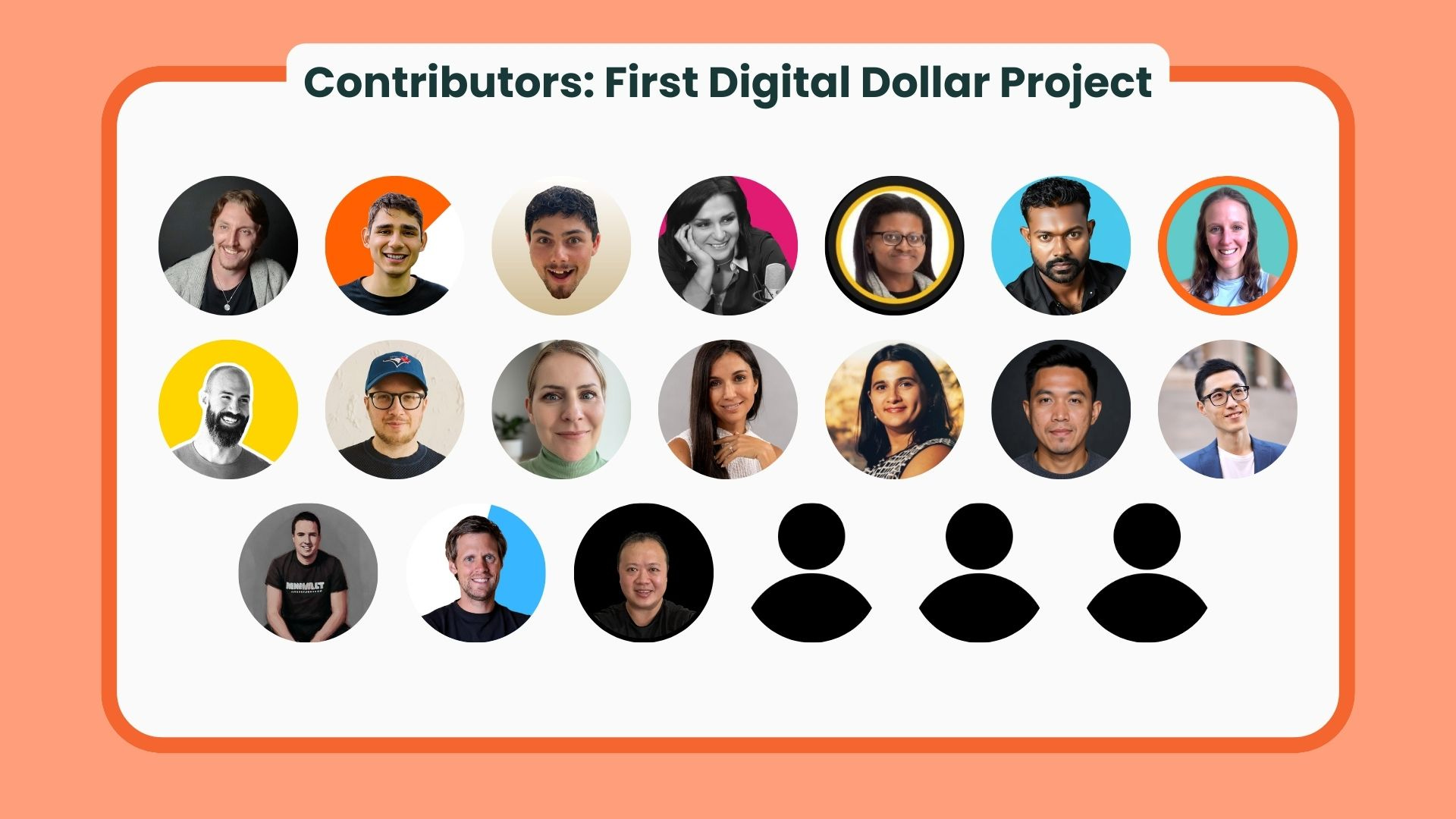
Do check out these amazing contributors and subscribe to their Substacks as well!
Find out how 20 solopreneurs with different products, different offers, different strategies, different paths earn their first digital dollars.
Follow along:
 | A guest post by
|
Did the microtactics work out? I really liked how you talked about the pressure of those first three subscribers. It makes total sense that having real people pay you would make everything feel way more serious and "real" than just writing for an algorithm!