
How a £50 Phone Call Changed Everything by David McIlroy
The awkward, unpolished story of earning your first digital dollar.

Welcome to the First Digital Dollar Project
Every week, a solopreneur shares the honest story of how they earned their first dollar online. They also join me on Substack Live to dive deeper into their journey.
Each story follows one path from idea to struggle to income. You will see the doubts they faced, the pivots they made, and the exact steps that led to that first sale.
Whether you are still searching for your breakthrough or already building momentum, these stories show you what is possible when you take action.
This post is a guest contribution from David McIlroy , a fellow solopreneur sharing the story of that first sale.
More on the project and the list of contributors:

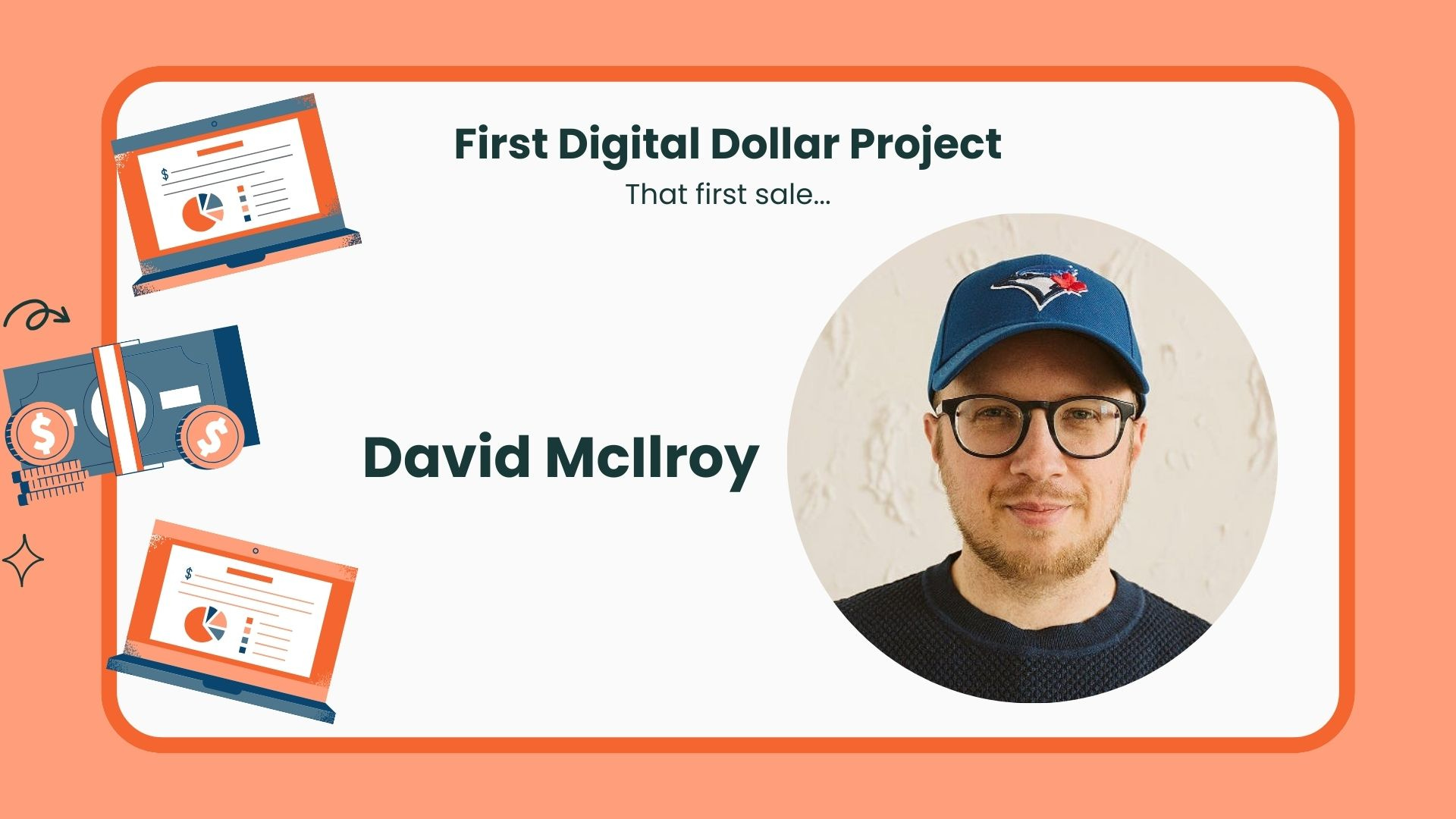
One simple phone call completely changed the game for me.
During it, I pitched my offer:
A business listing on my website, Trek NI.
That’s it. Not a course. Not an ebook. Not some revolutionary SaaS product.
Just a spot on a website promoting local businesses around Northern Ireland.
The price?
A whopping £50 (about $65 at the time).
I know what you’re thinking: “That’s barely enough for a nice meal out.”
And you’d be right.
But that £50 represented something bigger than the number in my bank account.
It was proof that someone valued what I’d built enough to actually pay for it.
This was late 2019, early 2020 (I’m a little fuzzy on the exact date). I’d been running Trek NI as a passion project for just over a year at that point, writing about local hiking spots and hidden gems around my home country, Northern Ireland.
The site was getting decent traffic. People were engaging with my posts on social media. But up until then, I wasn’t making a penny from it.
Then one day I had this thought: “What if local businesses would pay to be featured amongst this hiking-related content?”
Groundbreaking stuff, I know.
But that’s where it started.
Cluelessness, thy name is David
Unfortunately, in order to get the ball rolling, I had to push through a wall of discomfort as an introvert.
And I honestly didn’t have a clue what I was doing, either, which didn’t help.
I didn’t wait for some perfect marketing funnel (wouldn’t have known back then how to make one, anyway). I didn’t spend six months building an email list (didn’t know how valuable they can be). I didn’t create a fancy sales page with testimonials I didn’t have.
I just... started reaching out to people.
I scrolled through Instagram and Facebook, found businesses that seemed like a good fit, and sent them DMs. Some I even called. Yes, actual phone calls. In 2019. Like a caveman.
My pitch was embarrassingly simple: “I run Trek NI, a website that gets X visitors per month. I feature local businesses. Would you be interested in a premium listing for £50?”
(Premium, for £50. Lol)
That was basically it. There was no elaborate copy. No scarcity tactics. Just a straightforward offer.
The timeline from decision to sale? A few days. Maybe a week at most.
I made a few calls on a Monday. By Wednesday or Thursday, I had my first yes. By the weekend, the money was in my account.
It felt surreal. Like I’d accidentally stumbled into something that shouldn’t have worked. But it did.
The discomfort barrier
Oh, the barriers - where do I start?
The biggest obstacle wasn’t technical. It wasn’t finding the right platform or setting up payment systems. It was me. Specifically, the voice in my head that said, “Why would anyone pay you for this?”
I’d tried making money online before. Multiple times. Each attempt had failed miserably. There was a blog that never took off. The freelance writing gigs I applied for but never landed (or did land, and hated). The half-finished digital products sitting in my Google Drive, mocking me.
So when I decided to try selling listings on Trek NI, I was already carrying the weight of those failures.
But the real terror came when I had to pick up the phone.
I’m not a natural salesman. I’m not one of those people who can charm anyone into anything. The idea of calling a business owner and pitching them on something felt like volunteering for public humiliation.
The first few calls were brutal. I stumbled over my words. I didn’t have a proper pitch prepared. One guy cut me off mid-sentence and said he wasn’t interested. Most just let the phone ring until it went to voicemail.
I almost quit after the third rejection. I remember sitting there thinking, “This is exactly why you’ve failed before. You’re not cut out for this. Just stop.”
The DMs weren’t much easier. Watching someone read your message and not respond is a special kind of digital rejection.
What kept me going was spite, honestly. I was tired of quitting. Tired of having ideas and never following through. I figured if I was going to fail again, I might as well fail after actually trying this time.
Lessons learned
The biggest lesson I learned? People will pay for things you think are obvious or simple.
I thought my offer was too basic. Just a listing on a website? Who cares?
But as it turns out, business owners did care. They wanted the exposure. They valued the audience I’d built, even if I didn’t think it was that impressive. Those who were ready for what I was offering said yes right away.
I also learned that rejection doesn’t kill you. It stings, sure. But you survive it. And the more “no’s” you collect, the less each one matters.
And here’s something that surprised me: most people aren’t naturally good at sales.
I kept beating myself up for being awkward on those calls, but looking back, I realise the business owners on the other end probably felt just as awkward. They were just trying to run their businesses. I was offering them something that might help. It didn’t need to be smooth or easy for anyone. It just needed to be clear.
The other thing I learned was about pricing. £50 felt like a lot to me at the time. It felt bold. But in hindsight, I massively undervalued what I was offering. If I’d charged £150 or £200, I genuinely think people still would have said yes. I left money on the table because I didn’t believe my work was worth more.
And that’s the trap: you price based on what you’d pay, not what the value actually is to the customer.
Hindsight is 20/20
If I could turn back the clock and give my old self some solid advice, it’d be the following:
First, just start reaching out. Don’t wait til everything’s perfect. I didn’t have testimonials. I didn’t have case studies. I barely had a pitch. I just had an offer and the guts to put it in front of people.
You don’t need a massive audience. You don’t need thousands of followers. You need a handful of people who see value in what you’re doing.
Second, project confidence even when you don’t feel it. This doesn’t mean lying or being cocky. It means acting like what you’re offering is worth paying for (because it probably is).
Your internal doubts aren’t the customer’s problem. They’re deciding whether your thing solves their problem, not whether you feel good enough about yourself.
Third, be clear about outcomes. Don’t just describe features. Tell your clients what they’ll actually get.
“You’ll be featured on a website that gets 10,000 visitors a month from people actively looking for local businesses” is better than “I’ll write a nice article about you.”
Fourth, don’t let the customer dictate everything. Be flexible, yes. Listen to their needs, absolutely. But don’t twist yourself into knots trying to please them.
I made that mistake a few times in the beginning - adding extra deliverables, extending timelines, bending over backwards. It set a bad precedent and made the whole thing less profitable and more stressful.
Fifth, and maybe most important, don’t undervalue yourself. Seriously. If your first instinct is to charge £20 or $25 or whatever… double it. At minimum. You’re not doing anyone a favour by pricing too low. You’re just training them to expect cheap work.
And look, if you’re reading this and thinking, “But I’m not an expert” or “I don’t have any experience”, neither did I. I was just a guy with a website about Northern Ireland. That’s it. No fancy credentials. No business degree. No track record of success.
That first £50 didn’t change my life financially. But it changed how I saw myself. I went from “someone who tries and fails” to “someone who actually sold something.”
The second sale was easier. The third even easier. It wasn’t because I got better at pitching (though I did), but because I had proof. Proof that this wasn’t impossible. Proof that people would pay.
Your first digital dollar won’t be perfect. The sale won’t be smooth. You’ll probably underprice. You’ll definitely feel like an impostor.
Do it anyway.
On the other side of that awkward phone call or nervous DM is a version of you who knows they can actually do this.
And that’s worth way more than £50.
— David McIlroy
More on the project and the list of contributors:
Find out how 20 solopreneurs with different products, different offers, different strategies, different paths earn their first digital dollars.
Great reflection on how pivotal moments shape our journey, both in business and life. It reminds me of how concepts in mathematics, like infinity, can redefine our understanding; you might find my article on unexpected heroes in math interesting: https://theuncomfortableidea.substack.com/p/heroes-in-mathematics-might-be-nothing.