
5 Digital Products That DON’T Sell Anymore (And What To Do Instead!)
Think all digital products sell? Think again. The digital landscape has changed, and some products just don’t cut it anymore.

Access your FREE Solopreneur Success Hub - your subscribers-only comprehensive command center for building and scaling a successful one-person business.
I created this all-in-one toolkit for building a profitable one-person business, something I wish existed when I first started, and it saves me 20+ hours a week.
Now, it’s yours. Subscribe to Solopreneur Code and unlock it!
More information about the Hub here.
Save Time, Money, and Frustration
If you’ve ever spent hours crafting a digital product, only to launch it into the abyss with zero sales.
You’re definitely not alone.
So many creators hit this wall and wonder, “What am I doing wrong?”
Well, here’s the hard truth:
Digital products don’t sell just because you made them.
They sell because they solve a real, painful, specific problem.
That’s where most people miss the mark.
Before writing this post, I actually took this question to the folks in my Threads community and asked:
“Thriends, in your own opinion, what are the digital products that DON’T sell anymore?”
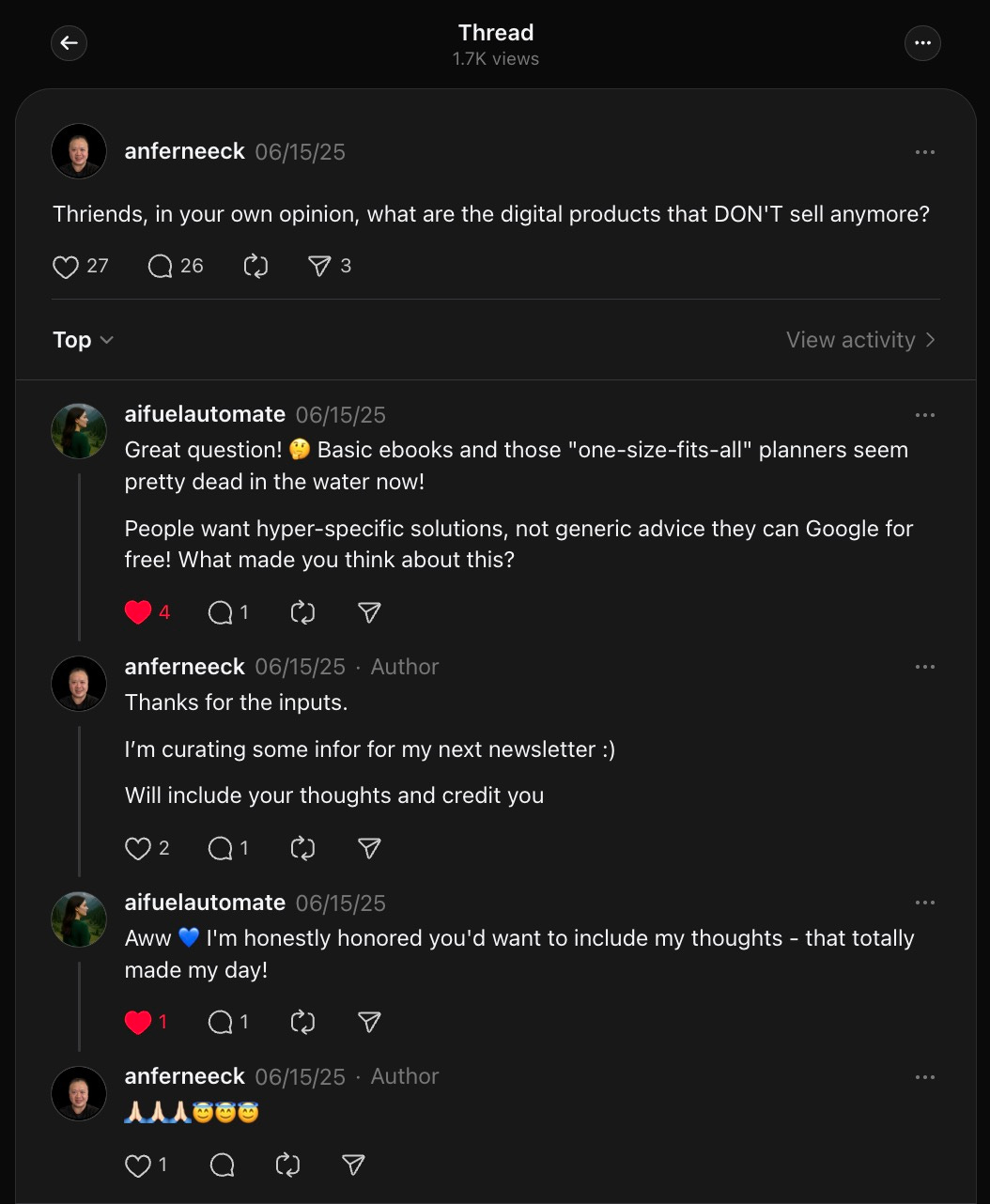
The responses were honest and insightful.
This blog draws from that thread and combines it with current market data and product trends to help you avoid the common mistakes most digital creators make by showing you what doesn’t work anymore.
I will also include what to do instead if you want to build a profitable, sustainable business selling digital goods.
Skip the read, hit play.
First Things First: Why Some Products Stop Selling
Let’s be clear.
The market’s not dead. In fact, the digital product industry is absolutely booming, worth trillions and growing fast!
So what’s the issue?
Here’s what you need to know:
Not all digital products are created equal.
People don’t want more content—they want real solutions.
If you don’t solve a specific problem, you don’t make a sale.
But hey, quick disclaimer before we go deeper:
End of the day, there are other important factors too.
If you have a massive following or you’re a genius at sales and marketing, you can probably sell anything.
This post is not for those unicorns.
It’s for the everyday creator like myself… the folks building from the ground up, learning as they go, and trying to get that first, second, or tenth sale.
Alright, let’s dive into the 5 types of digital products that just don’t sell anymore and what you can do instead.
1. Journals That Don’t Have a Specific Outcome
We’ve all seen them.
Beautifully designed digital journals… that don’t actually do anything.
They might have affirmations, prompts, or trackers but if they’re not built around a real goal or transformation, they will flop.
❌ Why They Don’t Sell:
The journal market is totally oversaturated. Just go Etsy and search ‘journal’ and you know what I mean.
Buyers don’t want another pretty PDF, they want results.
Most of these journals don’t have a clear outcome attached.
✅ What To Do Instead:
Design journals around a specific transformation.
For example:
A “30-Day Anxiety Journal” to help users reduce stress
A “Breakup Recovery Journal” focused on emotional healing
A “Fitness Accountability Journal” with measurable tracking
Bottom line: Tie your journal to a result people are actively looking for.
2. Digital Products Around Vague Topics (e.g., “Live Your Best Life”)
Creating a product about “finding yourself” or “unlocking your potential” might sound inspiring, but it’s just too broad in today’s competitive landscape.
❌ Why They Don’t Sell:
Lack of a specific pain point.
People can’t see how it actually applies to their situation.
Buyers are skeptical of general advice without a proven framework.
✅ What To Do Instead:
Narrow your niche.
Get painfully specific.
Instead of “live your best life,” try:
“How to Stop People-Pleasing in 30 Days”
“A Guide for First-Time Moms Balancing Work + Mental Health”
“Reignite Hobbies After Burnout for 9-5 Professionals”
The more niche, the better.
Vague doesn’t convert, specific does.
Having said all that, '“Live You Best Life” should still make a good lead magnet.
3. Generic Templates With No Clear Use Case
We all love a good Canva or Notion template, Right?
I know, because I sell tons of Notion templates.
But unless you’ve tailored it to a specific type of user solving a specific problem, it probably won’t sell.
❌ Why They Don’t Sell:
“Social Media Template” is way too broad.
No one knows who it’s for or why they need it.
There’s no unique value proposition.
✅ What To Do Instead:
Create problem-solving templates with laser focus.
Examples:
“Instagram Reel Templates for Wedding Photographers”
“Pricing Guide Template for Freelance Designers”
“Client Onboarding Notion Template for Virtual Assistants”
Your buyer should think, “That’s exactly what I need.”
4. Paid Communities With No Shared Goal or Direction
A paid community sounds like a great idea, until nobody knows why they’re there, what they’re working on, or where it’s going.
❌ Why They Don’t Sell:
Lack of direction leads to low engagement.
No common objective = chaos.
Feels like just another random Facebook group.
✅ What To Do Instead:
Build communities where everyone is moving toward the same outcome.
For instance:
A membership for Etsy sellers aiming to hit their first $1K month.
A YouTube growth mastermind for creators launching digital products.
A book-writing support group focused on finishing a draft in 90 days.
A club to help members create and sell their own digital products.
When members are on a mission together, retention and engagement skyrocket.
5. Stock Photos/Videos Made “Just Because”
Sure, you can shoot gorgeous stock photos or b-roll clips.
But just dumping them online and hoping for buyers?
That doesn’t cut it anymore.
This is especially true given that fact that anyone can just create any image with text using AI.
❌ Why They Don’t Sell:
The market is super saturated.
No targeting = no traction.
Buyers already have 1,000 options on platforms like Pexels and Unsplash.
✅ What To Do Instead:
Create niche stock assets for a defined audience and purpose:
A bundle of stock photos for black-owned beauty brands
A pack of vertical video clips for wellness coaches marketing on TikTok
Custom lifestyle images for real estate agents
When your product solves a specific marketing problem, it sells.
Beyond the Product: The Bigger Picture
Even the best product idea will fail if these critical elements are missing:
Product-Market Fit
Make sure what you’re creating aligns with:
Who your ideal customer is
The exact problem they’re trying to solve
The transformation they’re hoping for
Grow Your Own Audience
Relying solely on Etsy, Creative Market, or Gumroad?
You’ll drown in a sea of competition.
Start growing your own following whether that’s through Threads, TikTok, email lists (just like this Substack).

The Next Wave of Successful Solopreneurs Won’t Chase Money, They’ll Master These 3 Invisible Assets
Strategic Creation Over Random Ideas
It’s not about what you want to create, it’s about what helps others.
Ask yourself: “Is this something people are already struggling with and willing to pay to solve?”
It’s Not About You
This one might sting, but it’s true:
“It’s not about what you want to create or what you find easy, it’s about how you can help other people.”
That mindset shift alone can take your digital product biz from zero to thriving.
What You Should Do Instead
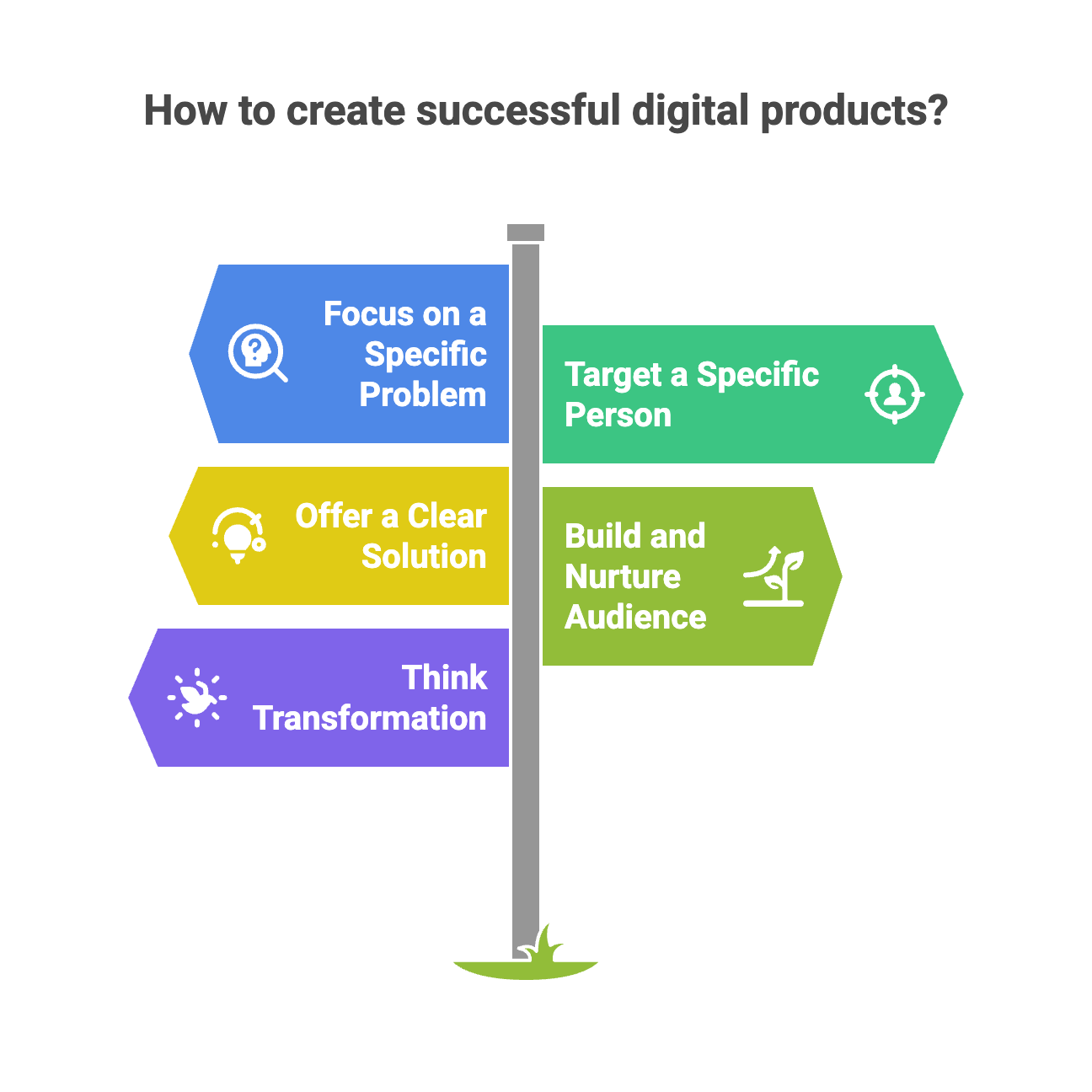
To recap, here’s what does work in 2025 and beyond:
✅ Focus on a specific problem
✅ Target a specific person
✅ Offer a clear solution
✅ Build and nurture your own audience
✅ Think transformation, not just information

Know What NOT to Build, Then Go Build What Works
If you take one thing away from this post, let it be this:
Digital product success is about being strategic.
Avoiding the 5 product types above can save you months of wasted effort and help you focus on building products that actually sell.
Yes, digital products still work.
Yes, the industry is still thriving.
But only if you treat your product like a solution, not just another thing to download.
Now go out there and build something that makes someone’s life better.
And hey, maybe it’ll make yours better too!
Until next time… build smarter, not harder.
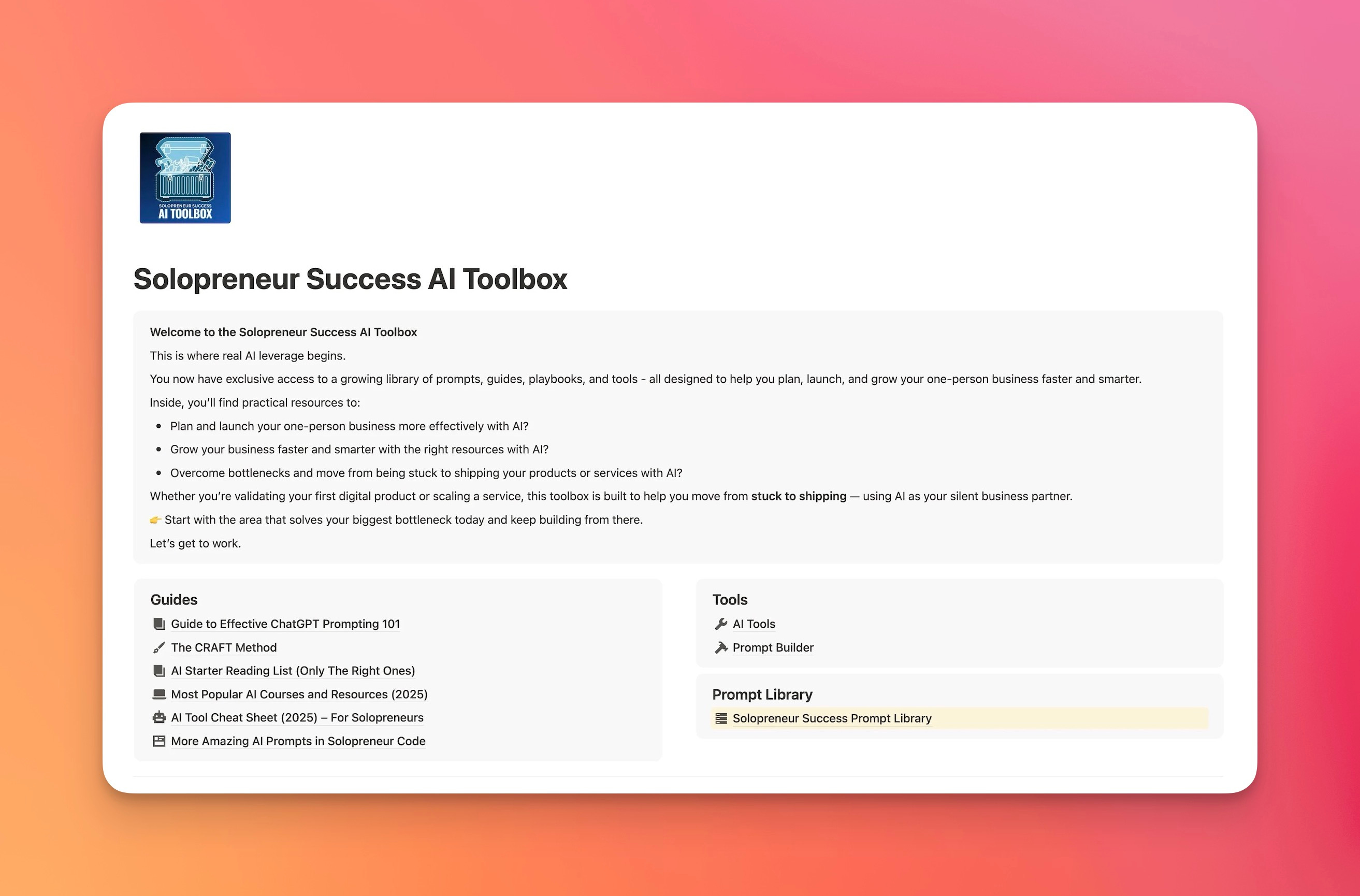
Transform how you run your business with Solopreneur Success AI Toolbox
“So often people are working hard at the wrong thing. Working on the right thing is probably more important than working hard.”
- Caterina Fake
Interesting Substack Posts I Read This Week:
How to Turn Every Book You Read Into 50 Pieces of Content (Easily) by
✉️ 7 Ways to turn a newsletter into revenue (And what worked for me) by
He Created An AI Coach and It Transformed His Business [Super Prompt Included] by
andReverse-Engineering Claude Code Using Claude Sub Agents (Part 1) by
How to create content that fits your audience? by
The Flow State Formula: How Solopreneurs Build Digital Products That Sell by
How To Write Notes That Convert - In One Minute (or Less) by
Starting Your Online Business with a Newsletter? Do This First by
The Best Substack Monetization Model For Beginner Creators by
Why Hermès Can Charge Whatever They Want (And You're Still Broke) by
The Self-Improving Prompt System That Gets Smarter With Every Use - And Anyone Can Rock by
Thanks for reading! Ready for the next step?
Let’s crack the growth equation and build a thriving one-person business on your terms!
Anfernee
Read.
Saved.
Learned a lot.
After reading this post I’ve to say I really need to improve my game jajaja
Thanks for the shout-out, @anferneeck